Energy Control Guide
Microgrid
A Coachella Valley homeowner's guide to solar, battery backup, generator readiness, monitoring, and the difference between having equipment and having control.
A home microgrid is not just a solar array. It is a coordinated energy system that can produce power, store power, manage backup, and help a homeowner decide what should run when the grid is expensive, unstable, or unavailable.
Microgrid
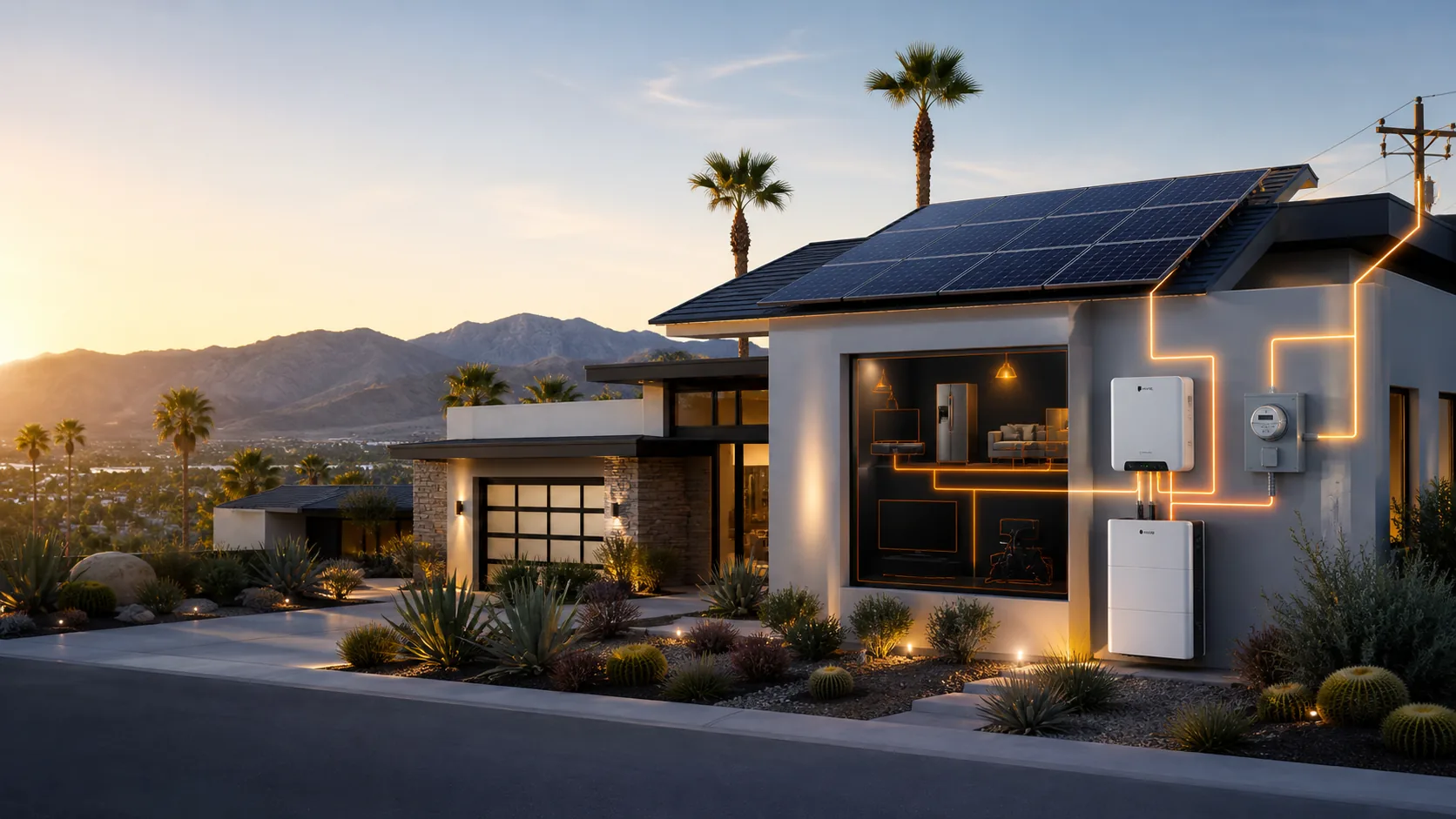
A home microgrid is a local energy system built around a specific property. In a residential setting, it usually combines solar panels, battery storage, an inverter, electrical controls, monitoring, and sometimes a generator. The goal is simple: make the home less dependent on the utility as the only source of usable power.
The important word is system. A microgrid is not one product bolted to the wall. It is the way production, storage, backup circuits, utility rules, and service monitoring work together. Done well, it gives the homeowner a clearer answer to questions like: What is producing right now? What is stored? What will keep running during an outage? What should wait until the sun is up?
How is a microgrid different from regular solar?
Regular solar is primarily about generation. Panels turn sunlight into electricity, and the inverter makes that electricity usable for the home. That can lower utility purchases, but solar alone does not automatically mean backup power.
Many solar-only systems shut down during a grid outage because they are designed to protect utility workers and electrical equipment. A microgrid is designed around a broader question: how should the home operate when the grid is present, when the grid is expensive, and when the grid goes down?
Why Coachella Valley homes need more control
Desert homes have a different energy profile than mild-climate homes. Long cooling seasons, pool equipment, EV charging, guest loads, and afternoon heat can all push demand higher at the exact time homeowners care most about comfort and reliability.
A useful design also has to account for location. A Palm Desert home may have different utility considerations than a home in La Quinta, Indio, or Palm Springs. Roof shape, shade, HOA expectations, battery placement, service access, and the utility serving the address all affect the right design.
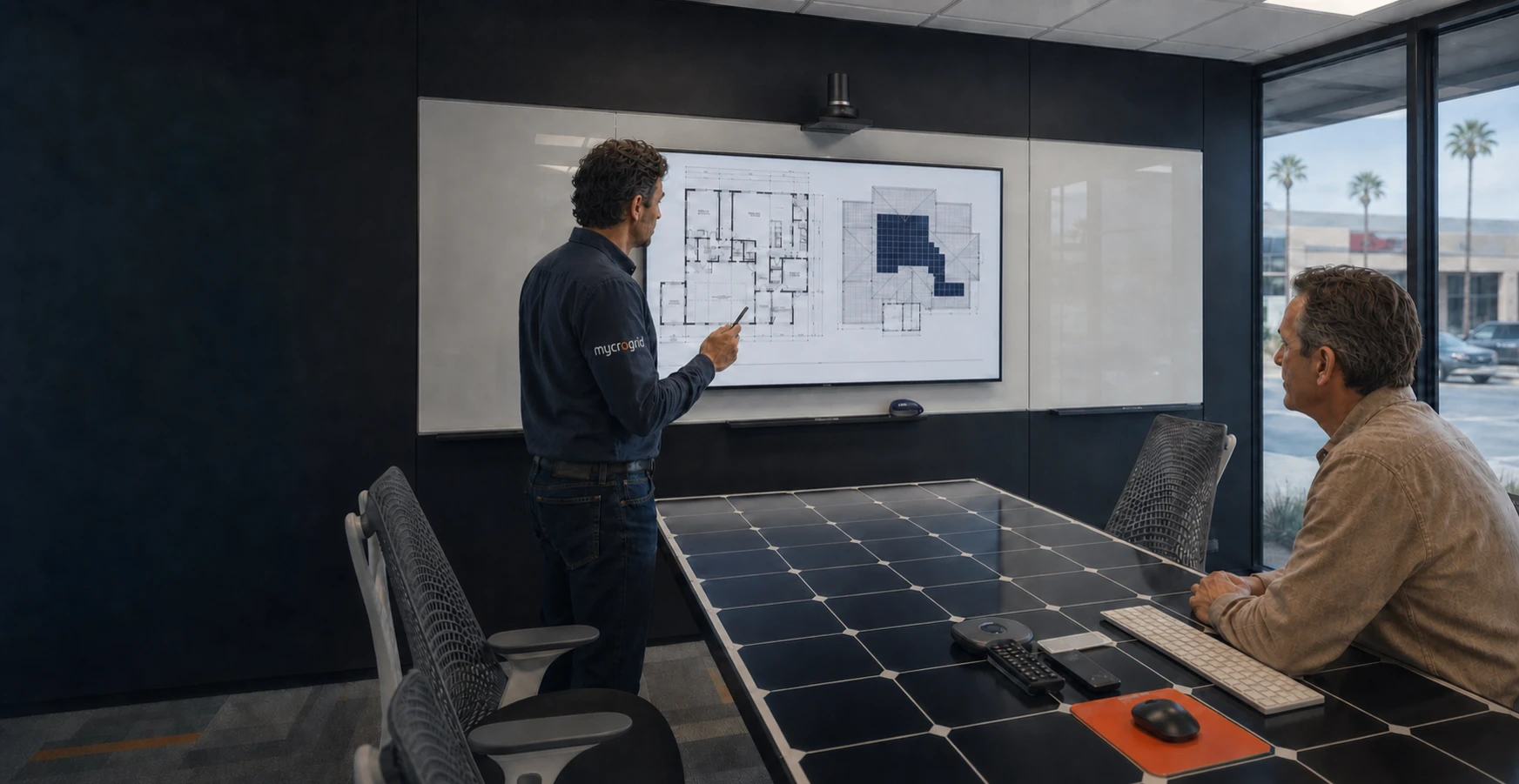
That is why a microgrid conversation should start with the property and the load profile, not with a generic panel count. The system should be sized around how the home actually uses power.
Solar, battery, generator, and monitoring each play a different role
A complete home microgrid can include several layers. Not every home needs every layer, but each one should be considered before the design is finalized.
The best mix depends on what the homeowner wants protected. A refrigerator, internet, garage door, and a few lights are a very different backup target than air conditioning, pool equipment, EV charging, and a detached casita.
- Solar panels produce energy during the day and can reduce utility purchases.
- Battery storage stores solar energy and can keep selected circuits running during outages.
- Inverters and controls manage the flow of energy between the panels, battery, home, utility, and backup equipment.
- Generator integration can provide an additional backup source for longer events or higher loads.
- Monitoring helps confirm that the system is producing, storing, and responding as intended.
Equipment is not the same as control.
Each part has a different job. The system works when those jobs are designed together.

- Solar production
- Creates daytime power on the property.
- Battery storage
- Stores energy for evening use and backup priorities.
- Utility connection
- Stays available as the backup, not the only plan.
- Generator readiness
- Optional secondary backup for longer events.
- Mycroguard™
- Monitors performance, behavior, alerts, and service needs.
- Controls
- Routes power around the loads that matter most.
Where Mycroguard™ fits
Mycroguard™ is the monitoring and service layer around the system. That matters because energy independence is not just what happens on installation day. It is what happens six months later, during the first heat wave, after a utility event, or when equipment behavior changes and nobody is standing in the garage looking at the inverter.

With a monitored system, the homeowner is not left guessing whether solar is producing, whether the battery is behaving normally, or whether an issue needs service. The point is to make the microgrid feel less like a collection of devices and more like mission control for the home.
What to evaluate before designing a home microgrid
Before choosing equipment, a homeowner should understand the loads, the site, and the service goals. A strong design process should answer these questions:
- Which circuits matter most during an outage?
- How much energy does the home use during summer afternoons and evenings?
- Which utility serves the address, and how do its rules affect solar and storage value?
- Where can batteries, inverters, and backup equipment be placed safely and cleanly?
- Will the home need EV charging, pool equipment, a casita, or future electrical upgrades?
- Who monitors and services the system after installation?
Mycrogrid® works through those questions before recommending a system. That is the difference between buying solar equipment and designing a home energy control plan.
Common questions
- Is a home microgrid the same as solar panels?
- No. Solar panels produce electricity, but a home microgrid coordinates solar, battery storage, backup equipment, electrical loads, monitoring, and controls so the home can use and protect power more intelligently.
- Do Coachella Valley homes still need battery backup if they have solar?
- Often, yes. Solar-only systems typically shut down during an outage unless they are designed with battery storage or approved backup controls. Batteries can keep priority circuits running and help the home use more of its own solar production after sunset.
- Can a generator be part of a home microgrid?
- Yes. Some homes use a generator as a secondary backup source, but it should be planned with transfer equipment, storage, monitoring, noise, fuel, permitting, and the homeowner's actual outage priorities.